
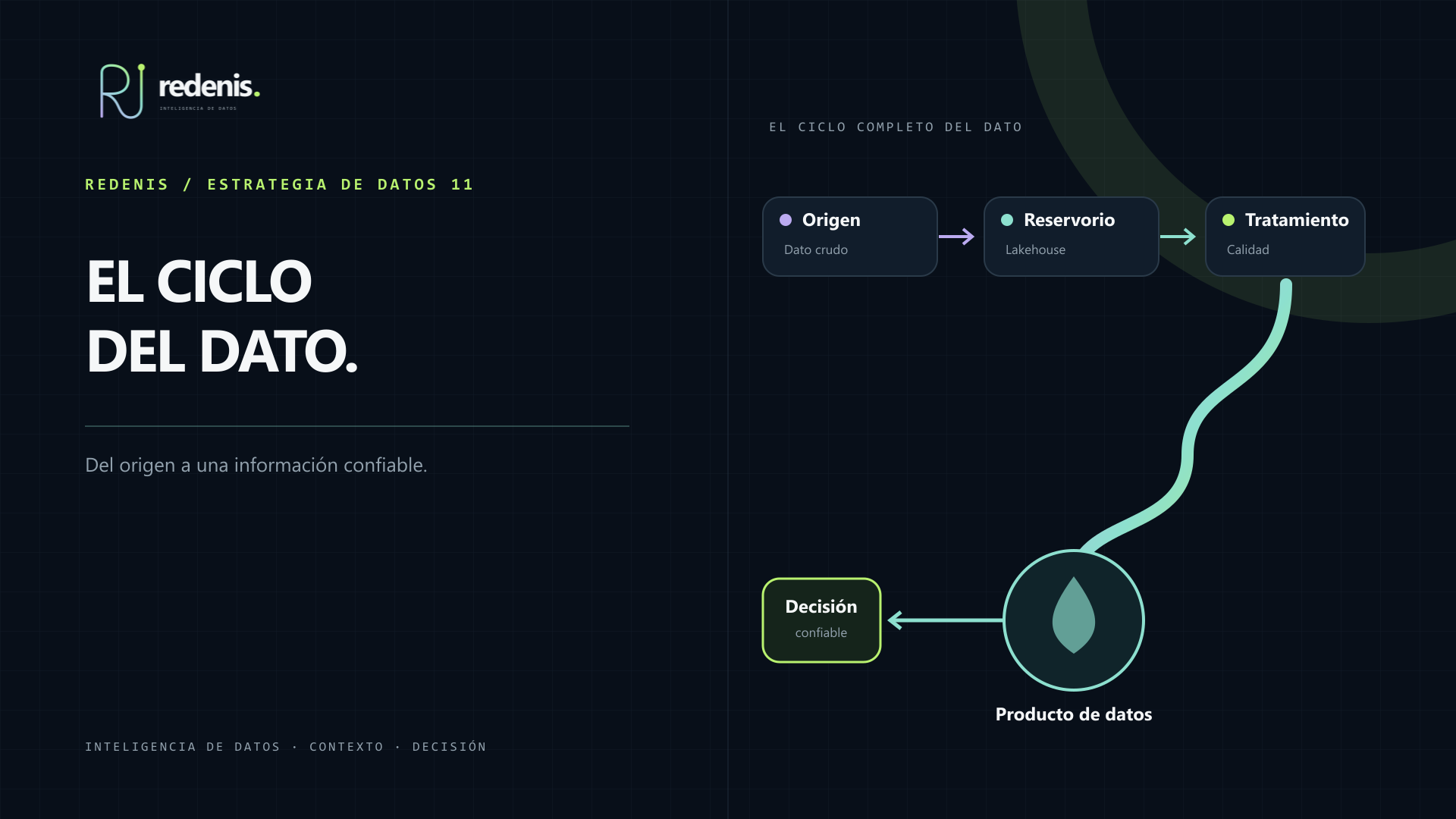
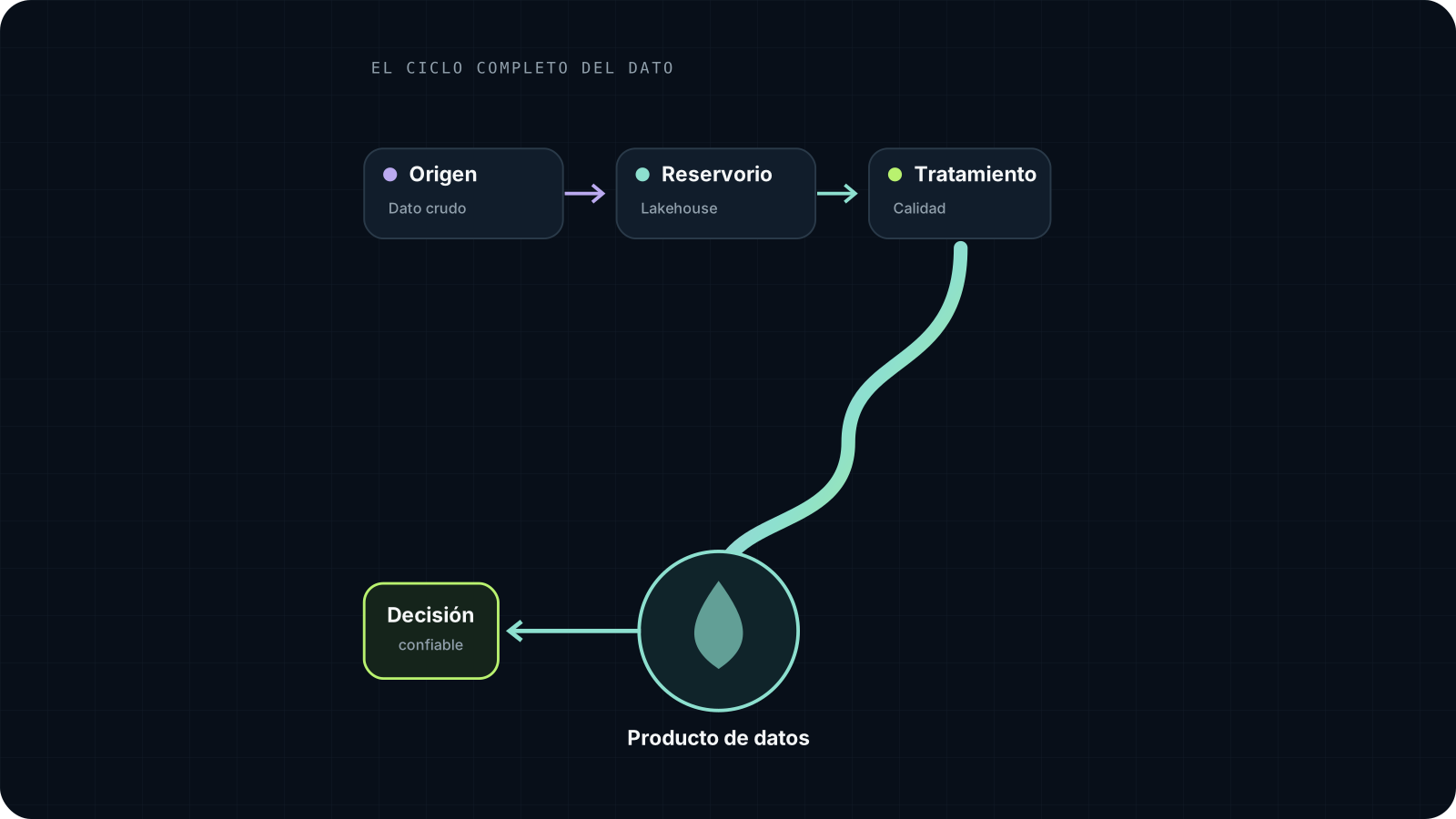
This article expands on the metaphor published on LinkedIn: data behaves more like a supply than a static asset. It originates in operational systems, accumulates, is treated and distributed. A large reservoir does not guarantee that information reaches users in a trustworthy form.
If the report is not trustworthy, we may be trying to drink directly from the lake.
The source
Operational systems create events for purposes other than analysis. Capture requires origin, cadence, ownership and extraction conditions.
The reservoir
A Lakehouse preserves history and combines domains, but storage alone does not create a product.
Treatment and context
Transformation standardises formats, resolves keys and exposes quality. Freshness, completeness, uniqueness, consistency and reconciliation must travel with the data.
Distribution and observation
Curated tables, certified flows, semantic models, APIs and reports serve different consumers. Observability closes the cycle by detecting delay, failure, volume anomalies, schema changes and affected products before the user finds them.