
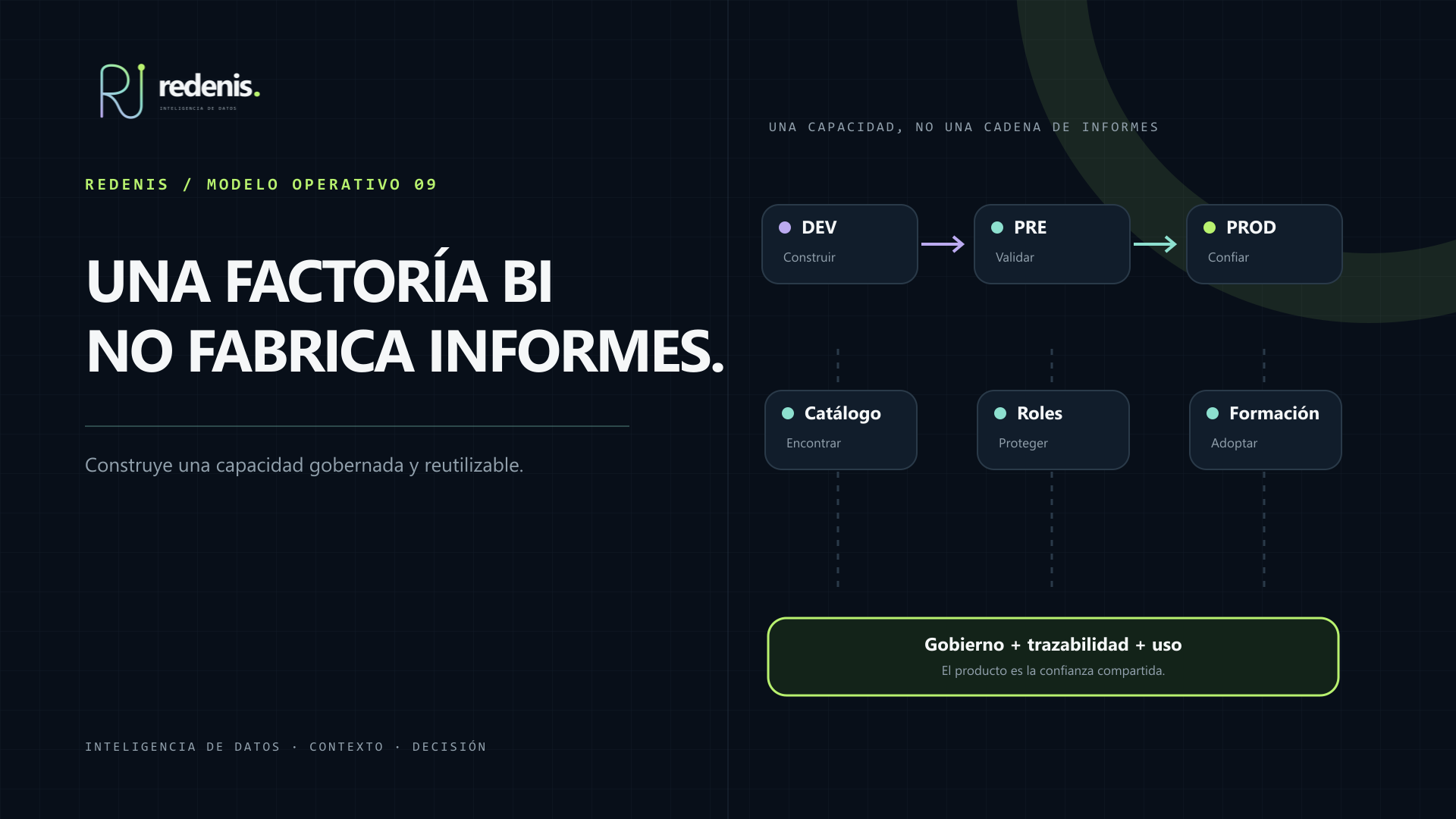
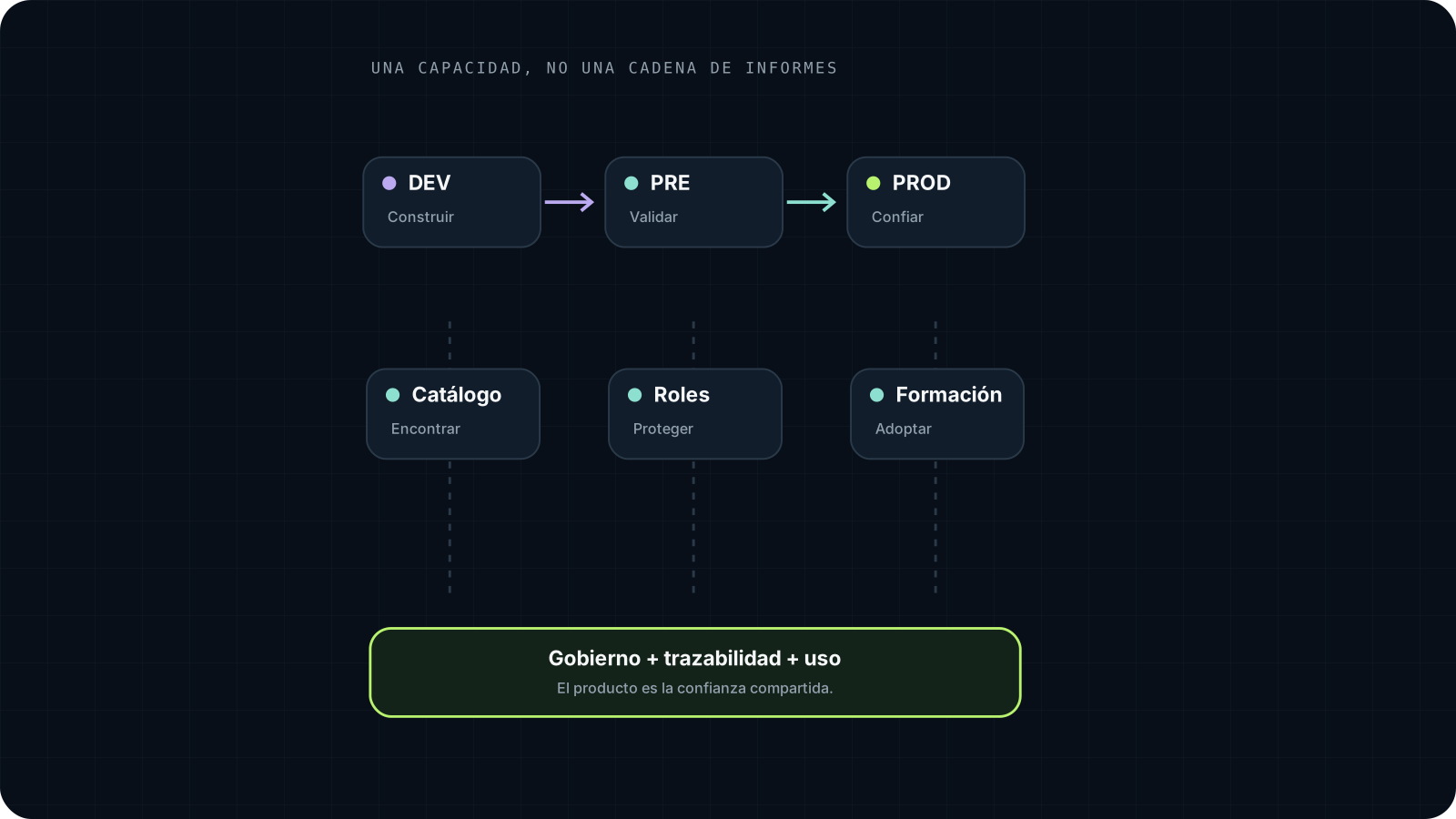
This article expands on the seven lessons shared on LinkedIn: transforming dozens of scattered workspaces into a Development–Preproduction–Production structure was more than a technical reorganisation. The important change came from connecting environments, catalogue, lineage, roles and enablement within one operating model.
A BI Factory does not produce more reports. It makes reliable information repeatable.
From isolated project to capability
A BI Factory defines a shared journey from demand to operation: entry criteria, responsibilities, validation, deployment, documentation and usage review.
Seven lessons
- Without adoption there is no product.
- Fewer environments enable stronger governance.
- Lineage turns assets into a system.
- Domains improve ownership and reuse.
- Roles and versions make change safer.
- Enablement is how capability scales.
- The transformation is cultural as well as technical.
Measure trust, not only output
Delivery count is insufficient. Cycle time, reuse, duplication, incidents, catalogue coverage, adoption and autonomy reveal whether the Factory has become an organisational capability.